Index

|
Saint Casimir Parish
|
MINISTRY OF
PRAISE NEWSLETTER
St. Casimir Parish
August, 2026
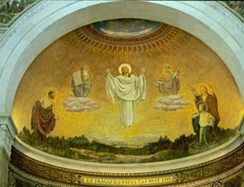
TRANSFIGURATION (Aug. 6th)
In the shining cloud the Spirit is seen; from it the
voice of the Father is heard This is my Son, my beloved, in whom
is all my delight. Listen to him. (Matt.
17:5)
|
PLEASE PRAY FOR THE FOLLOWING
INTENTIONS
- Let us pray that in large cities, often marked by
anonymity and loneliness, we find new ways to proclaim the Gospel, discovering
creative paths to build community. (August Papal Intention)
-
May God bless
Father Morkunas as he strives to build a Christlike community at St. Casimir
Parish.
- May all parishioners strive to help Father Morkunas
and the parish of St. Casimir, by supporting and attending parish activities,
and thus acting as good stewards who share their gifts of time, talent, and
treasure for the betterment of the parish community.
- May the Holy
Spirit guide parishioners involved in:
1. performing the work of our parish
Pastoral Council, new ministries, and religious education programs
2. enhancing existing programs, and
3.
raising the necessary funds to operate and grow our parish.
- May those
suffering from illness of any kind and those who care for them experience God’s
love through the support of family and friends.
- May God bless those who risk
their lives in order to help others in our own country and around the world.
- May our deceased
parishioners and loved ones rest in the peace of Christ.
- May you, our
Ministers of Praise, be validated in your belief in the power of prayer.
-
WHAT’S
HAPPNING  AT ST. CASIMIR PARISH AT ST. CASIMIR PARISH
August 7: First Friday Eucharistic Holy Hour 8-9am (Church)
15:
Feast of the Assumption - Not a Holy Day of Obligation
|
SAINT
FOR AUGUST
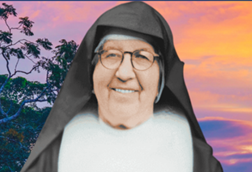
ST. MARIA TRONCATTI
1883-1969
Feast Day: August 25
Patron saint of missionaries, nurses, and the
Shuar people (indigenous people in Ecuador)
|
 |
|
Maria Troncatti was born on 16
February 1883 in Corteno Golgi, in the Province of Brescia, Italy, into a large
farming family. Growing up in the alpine environment, she received her
First Communion at the age of six and attended catechism regularly.
Reading the Salesian Bulletin inspired in her a desire for mission work.
In 1908 she made her first religious profession as a Daughter of Mary Help of
Christians (Salesian Sisters of Don Bosco) During the First World War she
trained in healthcare and served wounded soldiers with the Italian Red Cross.
In November 1922 she was sent to Ecuador, to the Amazon region among the
Shuar people, where she lived for over 40 years. There she not only provided
medical care, including surgery, dentistry and nursing in remote jungle areas,
but also evangelised, taught literacy, supported women’s dignity, opposed
forced marriages, and built strong relationships with the indigenous
community. She earned the affectionate name “Madrecita” from the Shuar.
On 25 August 1969, while traveling by plane in Ecuador to attend a
retreat, she died in a crash near Sucúa. Her body rests in the mission
territory. The Church recognised her heroic virtues (declared Venerable 12
November 2008) and beatified her on 24 November 2012 in Macas, Ecuador. A
second miracle attributed to her intercession was approved in 2024, paving the
way for her canonisation on 19 October 2025.Her life stands as witness to
missionary zeal, cultural respect, medical‑care in poverty settings, and the
radical call to bring the Gospel into frontier regions.
(All Saint Stories.com)
Transfiguration
The word transfiguration comes from the latin, trans
(across) and figura (form, shape). Therefore it is a change in
form or appearance. On August 6th
the church celebrates the feast of the Transfiguration and recalls when Jesus’
appearance changed. The apostles Peter, James and John were with Jesus on the
mountain praying when this glorious event took place. Moses and Elijah appeared with Jesus and
talked to him about his death that would soon take place. This ties the Old Testament to the New
Testament, Jesus is the fulfillment of the law and the prophecies of the Old
Testament. The apostles were given a
better understanding of who he was, when he went through a dramatic change in
appearance so they could behold his glory.
God once again tells them that Jesus is his son, listen to him. It was a day they never forget and probably
didn’t fully understand at the time. This event was told to the rest of the
disciples after his death and we still read it today! May we behold the glory of God and listen to
him!
|
|
 REFLECTION REFLECTION |
August 15th The Assumption of the
Mother of God
“My
soul proclaims the greatness of the Lord; my spirit rejoices in God my Savior
for he has looked with favor on his lowly servant. From this day all
generations will call me blessed: the Almighty has done great things for me and
holy is his Name.” Luke 1:46–49
Today we celebrate one of seventeen different
memorials, feasts and solemnities in honor of the Blessed Virgin Mary that are
found on the Roman Liturgical Calendar. Today’s celebration is one of the four
great Solemnities by which our Blessed Mother is honored. Obviously, no other
person other than our Lord is honored and celebrated with as much solemnity as
the Mother of God.
The Solemnity of the Assumption honors the fact that
when the Blessed Virgin Mary completed her life on earth, she was taken body
and soul into Heaven to be with her resurrected Son so as to adore the Most
Holy Trinity forever. It’s an amazing fact to consider that she retains her
body and soul, united as one in Heaven, in anticipation of that glorious day
when the new Heavens and Earth will be created and when all the faithful will
rise so as to live in a new bodily form forever with God.
Though this dogma of our faith had been held and
believed by the faithful from the earliest times of our Church, especially
since it was witnessed by those closest to our Blessed Mother at the time of
her glorious Assumption, it wasn’t until November 1, 1950, that Pope Pius XII
solemnly proclaimed it to be so, raising this teaching of our faith to the
level of a dogma, meaning, it must be held and believed by all. In part, the
Holy Father declared, “…we pronounce, declare, and define it to be a divinely
revealed dogma: that the Immaculate Mother of God, the ever Virgin Mary, having
completed the course of her earthly life, was assumed body and soul into
heavenly glory.”
The Gospel passage quoted above comes from the
beginning of Mary’s song of praise, her Magnificat, by which she
not only gives the greatest glory to God but also reveals who she is. She is
the one whom “all generations” will call “blessed.” She is the one for whom
“the Almighty has done great things.” She is the one who will eternally
proclaim “the greatness of the Lord” and whose spirit will forever rejoice in
God her Savior. And she is that lowliest of servants whom God has raised up to
the greatest glory.
Reflect, today, with the whole Church, upon the Most
Glorious Ever-Virgin Mary who was conceived without sin, remained sinless
throughout her life, and was taken body and soul into Heaven where she now
adores the Most Holy Trinity and intercedes for you and for the whole Church.
This is a Solemnity of great rejoicing! Share in this joy with the whole Church
and with all the saints in Heaven!
Most glorious and Ever-Virgin Mary, I rejoice today
with you and with the whole Church for the most glorious things that God has
done for you. You are beauty beyond beauty, Immaculate in every way, and worthy
of our deepest love. As you now share body and soul in the glories of Heaven,
please pray for me and for all your dear children on earth. Cover us with your
mantle of love and pour forth the mercy of God upon us always. Mother Mary,
assumed into Heaven, pray for us who have recourse to thee. Jesus, I trust in
You.
(catholic-daily-reflections.com/2025/08/14/)
s

|
